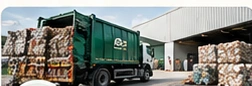
01 / COLLECTION
Collection & logistics
Biological feedstock pickup, source-separated construction materials, reverse logistics and specialty hauling.
Collection and specialty transport
BUSINESS & MARKETS REAL MATERIALS. REAL OPPORTUNITY.
The opportunity is larger than owning a processing plant. Circular industries need collection, logistics, equipment, testing, maintenance, preparation, manufacturing, repair and customer service. Each link adds value, creates jobs and strengthens regional supply chains.
Illustrative opportunity areas, not an announcement of operating projects, committed customers or projected revenue.
Multiple businesses. One connected system.
BUSINESS OPPORTUNITIES ACROSS THE SYSTEM
Opportunity isn't limited to owning a facility. Existing local enterprises may contribute services and equipment, while new firms could emerge where unmet demand has been validated.
THE WORK BEHIND THE OPPORTUNITY
From first collection to the last customer, every specialty has a role to play.
Biological feedstock pickup, source-separated construction materials, reverse logistics and specialty hauling.

Sorting, crushing and screening, washing, drying, grinding and dependable feedstock preparation.

Laboratory testing, quality control, material qualification, engineering and equipment maintenance.
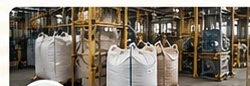
Biochar and bioproducts, recycled aggregates, concrete products and other qualified recovered-material products.

Industrial machinery, pumps and motors, electronics, components and controls.

Potential reclaimed-water systems, storage and transfer, shared energy systems and specialized treatment or testing.
The six categories and photographs come from the approved V2 page 11 composition. The expanded paragraphs describe possible roles, not verified suppliers or contracts.
THE REGIONAL MARKET NETWORK
Individual firms may specialize in one step. What makes a pathway scalable is the connection between dependable resources, qualified services, manufacturers, and real markets.
Supply and demand connect through logistics, testing, manufacturing, talent and customers. These are potential regional roles—not a pre-existing contracted network.
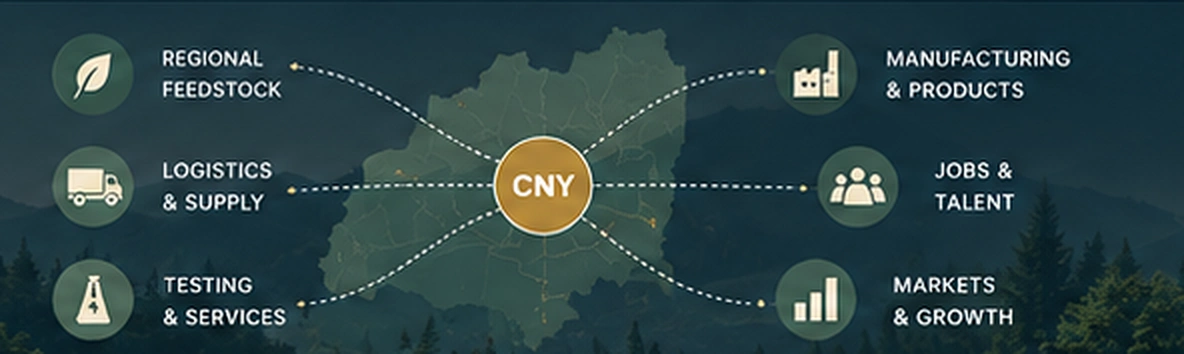
 REGIONAL CONNECTIONS
 Regional
 Logistics
 Testing
 Manufacturing
 Jobs
Jobs Markets
The six original V2 operating-role icons, recomposed for small screens.
WHAT CONNECTS THE MARKET
Know the material, volumes, condition and current alternatives.
Match processing, testing, equipment and logistics to actual needs.
Confirm buyers, specifications and commercially viable repeat orders.
COMMERCIAL REALITY
The approved model asks whether each supplier, service provider, producer and buyer has a practical reason to participate. The test is commercial and technical—not just a compelling illustration.
Illustrative screening questions; results not yet established for any specific CNY opportunity.
The material owner needs a safer, more reliable or higher-value destination than the current alternative, with reasonable collection requirements and understandable responsibility.
Know what it is, what varies and how much can be supplied.
Demonstrate relevant technical, environmental and regulatory fit.
Include collection, processing, logistics, risk, margins and contracts.
Confirm credible customers and sustainable operating responsibilities.
BUILD WHAT WORKS. REUSE WHAT REMAINS.
The commercial possibilities are broader than a single product. New capability is valuable when it helps firms win repeat work across multiple customers and sectors.
Collection, hauling, process equipment, maintenance, testing, packaging and customer services.
Potential operational, technical, skilled-trade and entrepreneurial pathways.
Quality systems, water services, logistics and know-how that may serve additional customers.
No particular CNY customer, job number, revenue total or financing arrangement is implied by the opportunity map. Each business model needs partner confirmation and a documented path to sustainable demand.
HELP SHAPE WHAT COMES NEXT
Local experience can identify supply streams, processing gaps, credible customers, equipment capabilities and the services that would make promising pathways commercially useful.
Prepare an outline about local materials, skills, demand or practical constraints. Nothing is submitted or stored by the preparation page; a receiving organization and official intake channel have not yet been established.
Prepare a contribution