

A PROPOSED 90-DAY SCOPING PLAN FROM POSSIBILITY TO PRIORITY

Know what is worth doing next.

The aim is a decision-ready regional opportunity portfolio: a prioritized shortlist, preliminary business cases, and practical delivery options that leadership can assess before committing resources.

Proposed framework based on the approved V2 roadmap. Timing, participation and resources require agreement.

THE PROPOSED RESULTDECISION-READY, NOT BUILD-READY
THE HANDOFF

A portfolio leaders can actually assess.

Three connected outputs, with sources, assumptions and unresolved questions made visible.

01
Prioritized opportunity inventoryWhat deserves deeper examination, and why
02
Preliminary pathway business casesMaterials, qualified uses, buyers and economics
03
Delivery options and next-step planPartners, constraints, responsibilities and tests
THEN A DECISIONAdvance · validate further · defer · stop

HOW THE WORK UNFOLDS

Three phases of work. One informed decision.

The proposed 90-day schedule has a practical sequence: map widely, test a smaller set of candidates, and clarify the choices needed for a responsible next step.

01
DAYS 1–30EXPLORE & PRIORITIZE

Aerial wooded river and surrounding Central New York landscape from approved roadmap reference

Define what’s worth doing next.

  • Map regional opportunities across key streams
  • Assess scale, fit and near-term value
  • Prioritize the most promising areas
  • Build a shared opportunity inventory
OUTPUTPrioritized Opportunity Inventory
02
DAYS 31–60VALIDATE & DEEPEN
Recovered glass material from original V2 validation illustration

Map the strongest pathways.

  • Deep-screen top opportunities
  • Analyze feedstock, technology and markets
  • Identify leading candidates for near-term action
  • Develop initial business cases
OUTPUTFirst-Pathway Business Cases + Prioritized Pipeline
03
DAYS 61–90PLAN & ENABLE
Industrial material processing infrastructure in original V2 roadmap illustration

Identify enabling infrastructure and delivery.

  • Define infrastructure and site needs
  • Assess financing and delivery structures
  • Identify key partners and implementation models
  • De-risk and refine the preferred pathway(s)
OUTPUTInfrastructure Options + Delivery Plan
DAY 01
DAY 90

WHAT SUCCESS LOOKS LIKE

A clear shortlist. A case that holds up.

The win is not the number of meetings or reports. It's being able to explain which candidates deserve the next investment of time and money—and which do not.

THE SUCCESS TEST

By the end, we should be able to answer four questions.

Each shortlisted pathway needs an explicit evidence record, gaps that remain, and an accountable next action. A negative result can still be valuable if it avoids the wrong commitment.

PROPOSED END PRODUCT Prioritized shortlist + business-case dossiers + delivery options
01

Is there a dependable resource?

Who controls it, what volume exists, and what makes it usable?

02

Is there a qualified use and credible demand?

Which applications, specifications, customers and partners make it real?

03

Could the economics and delivery work?

What are the cost drivers, existing capabilities, constraints and risks?

04

What is the next justified action?

Whose decision is needed, what evidence remains, and what would it take?

These are proposed decision-quality criteria, not confirmed project findings. Specific acceptance thresholds must be agreed with technical, commercial and public stakeholders.

THE SCREEN BEHIND THE SHORTLIST

Evidence first. Commitment second.

Use the same essential questions for each candidate, with different technical standards and buyer requirements. The screen exposes weak assumptions before a delivery decision.

FROM IDEAS TO DECISIONS

Characterize. Compare. Qualify.

Resources, qualified users and real commercial demand must support a pathway before new infrastructure or long-term agreements make sense.

CHARACTERIZE → COMPARE → QUALIFY
01 / SOURCE CHARACTERIZATION

Is there a dependable regional resource?

Clarify where it originates, how much exists, variation, contamination, current use and potential handling constraints.

EVIDENCE TO REQUESTSource owners, available volumes and timing, sampling, specifications, logistics and current disposition.
01Commercial diligence

More than a promising idea

02Technical fit

Specifications and performance

03Responsible delivery

Owners, costs, permits and risks

AFTER THE SCOPING WORK · LEADERSHIP DECISION

Choose the next justified move.

The scoping team prepares decision dossiers and recommended next actions. Leadership and participating organizations can then authorize a targeted pilot, commission more evidence, defer an opportunity, or discontinue it. A decision to build is not presumed.

THE DECISION HANDOFF RECOMMENDATIONS + RESPONSIBLE OWNERS + NEXT-WAVE ACTION PLAN
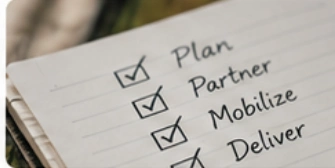
Action planning checklist from the original V2 roadmap visual
01Prepare decision dossiers for leadership
02Define near-term implementation actions
03Align partners and resource needs
04Set up for execution beyond day 90

A ROADMAP NEEDS REGIONAL EVIDENCE

The strongest candidates emerge from people who know the system.

Input may come from material or water generators, processors, potential users, researchers, public agencies and workforce partners. The purpose is to test opportunities—not solicit unverified endorsements.

01

Resource holders

Volumes, variability, current handling and practical constraints.

02

Industry & buyers

Specifications, existing capacity, price and willingness to test.

03

Technical partners

Characterization, qualification, safety and operating experience.

04

Public & civic partners

Infrastructure, procurement, community priorities and governance.

TURN EVIDENCE INTO THE NEXT MOVE

Give Central New York a better basis for action.

A strong scoping effort leaves a transparent record: where the opportunity is, what could make it commercially real, where evidence is missing, and who can move it forward.

This is the approved V2 proposed scoping concept, not an announced or funded program. Implementation requires partner agreement and authorization.

Clearer prioritiesStronger pathwaysReady partnershipsReal-world progress
Explore the opportunity portfolio What makes a market real?