⌕
01 / RESEARCH & EVIDENCESources and documented context
Regional projects, material streams, established applications, cited sources and distinctions between evidence and assumptions.
WORKING PAPER RESEARCH · ANALYSIS · PATHWAYS
The working paper contains the research, economic logic, technical pathways, governance ideas and source notes behind the public site. It is intentionally more detailed than the website.
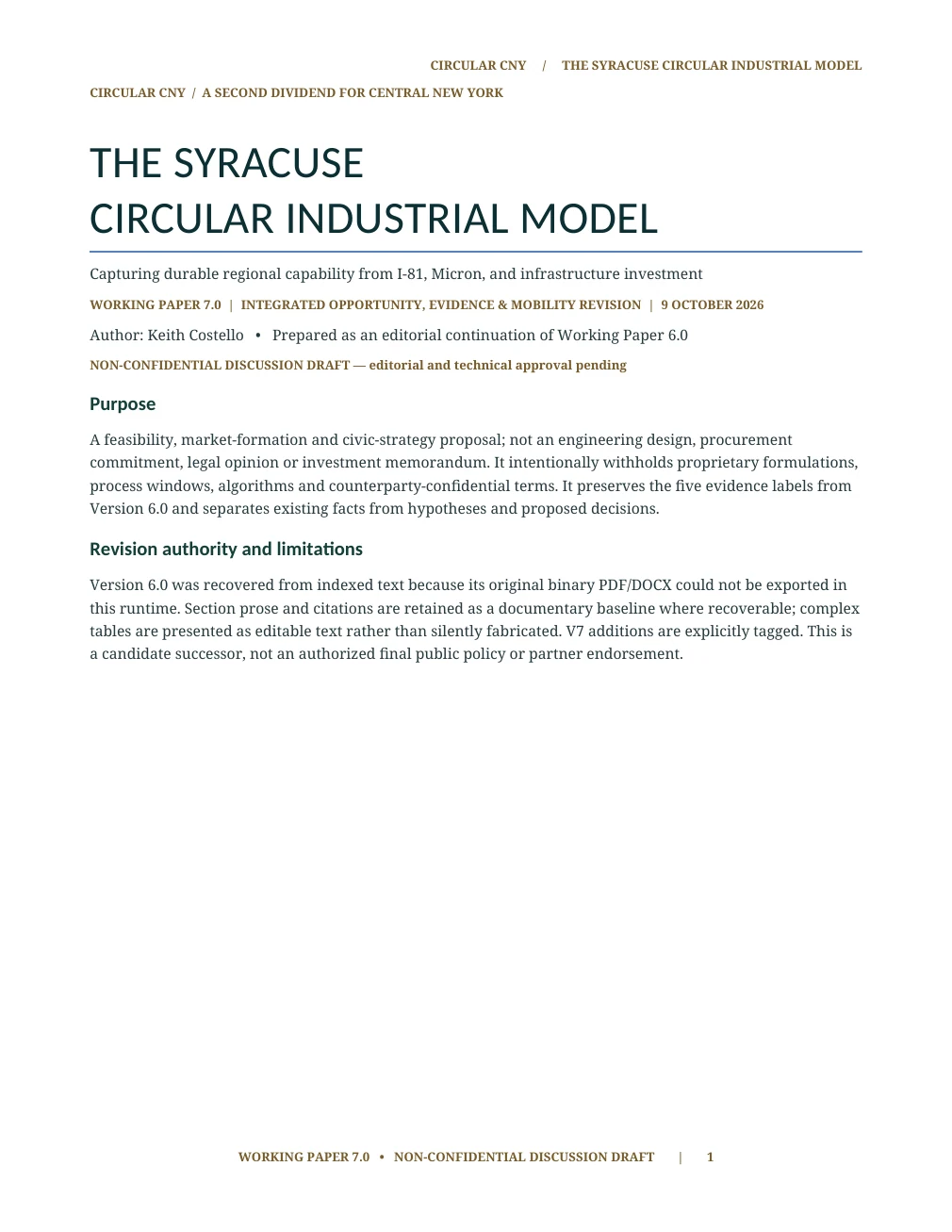
A feasibility, market-formation and civic-strategy proposal—not an engineering design, procurement recommendation, legal opinion or investment memorandum.
THE RESEARCH BEHIND THE PROPOSAL
The website introduces opportunities and possible next steps. The paper documents the reasoning, assumptions and conditions under which a real pathway might—or might not—make sense.
Regional projects, material streams, established applications, cited sources and distinctions between evidence and assumptions.
Ownership, material quality, qualifications, market economics, risks and which questions cannot be answered without counterparties.
Recovered glass and concrete as early test cases; broader streams remain candidates for disciplined screening, not automatic projects.
Supplier formation, transferable know-how, local jobs and public value, alongside environmental, distributional and implementation safeguards.
THE CENTRAL CLAIM
The objective is not simply more recycling or more infrastructure. It is to identify the capabilities that could remain useful after the original construction work is finished.
Qualified products, relationships between suppliers and buyers, testing capability, skilled operators, durable contracts and reusable operating knowledge may outlast one construction program.
Identify real material owners, existing markets and specific buyer requirements.
Test glass and concrete cases against technical standards and delivered economics.
Use existing processors first; add infrastructure only when credible customers and economics justify it.
INTERPRET THE CLAIMS CORRECTLY
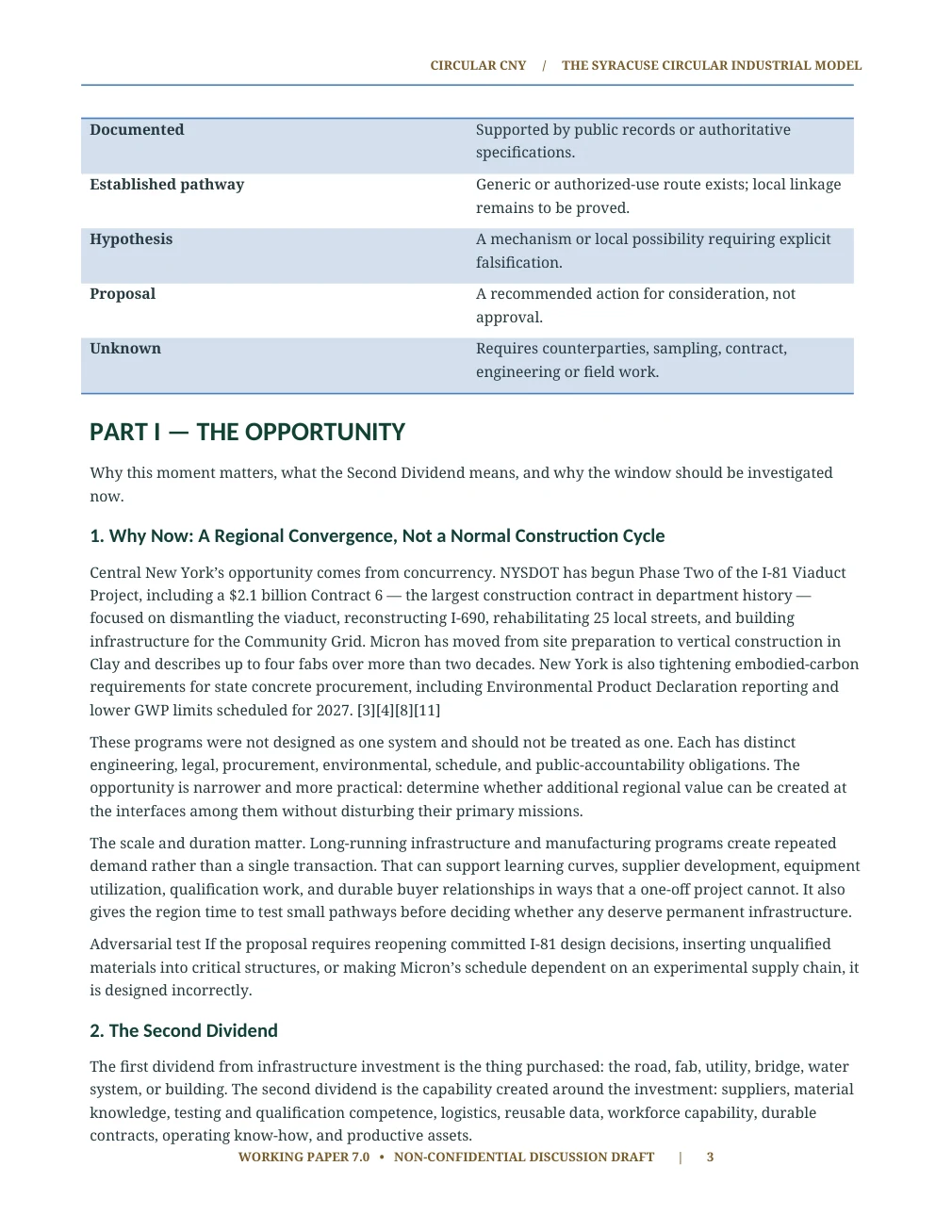
The working paper explicitly distinguishes documented information from established-use routes, hypotheses, recommendations and unknowns. These classifications prevent proposed opportunities from being presented as completed projects.
Supported by current public records, specifications or authoritative sources.
A technology or approved-use route exists, but local commercial linkage may remain unproven.
A proposed system or economic-development mechanism that still requires testing.
An action recommended for consideration, not an approved policy or project.
Information that requires counterparties, sampling, contracts, engineering or field work.
THE COMPLETE DOCUMENT
This package includes the editorially integrated non-confidential 26-page Working Paper 7.0. It is a research and scoping document; it remains a review-stage discussion draft pending author, technical and publication approval.
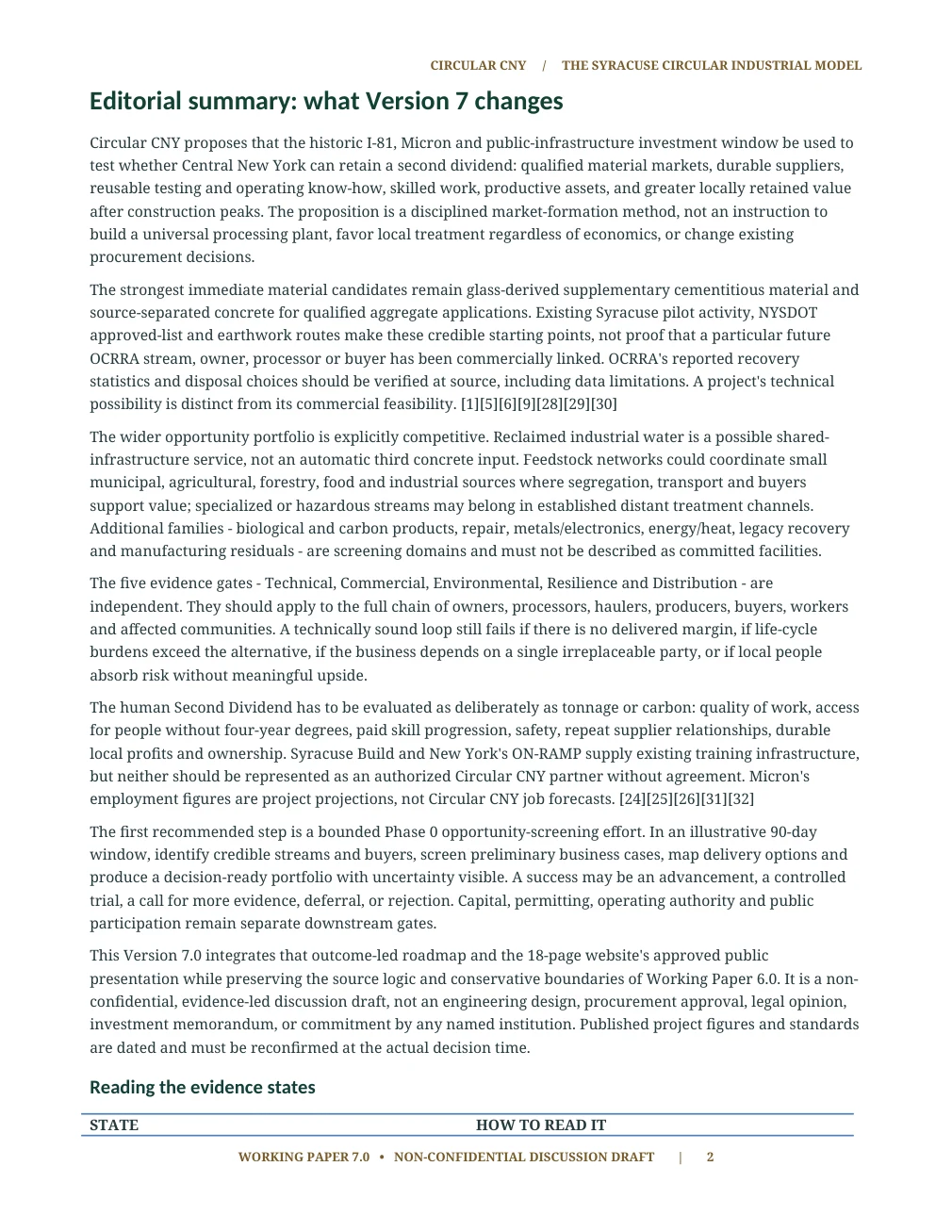
ACTUAL DOCUMENT · OCTOBER 2026WHAT CHANGED IN VERSION 7
This edition preserves the Working Paper 6.0 foundation and reconciles the site’s expanded portfolio, reclaimed-water infrastructure, supply networks, jobs and ownership, five-gate qualification, and the outcome-led 90-day roadmap. It remains a non-confidential discussion draft; all factual, technical, and rights approvals are outstanding.
HOW THE TWO WORK TOGETHER
The website is an accessible entry point. The research paper contains deeper reasoning and citations. Neither should obscure what remains unresolved.
Communicate the opportunity, first pathways and ways to help clarify what comes next.
Explore the websiteShow the reasoning, evidence, assumptions, constraints and open questions behind the public overview.
Open the paperCounterparty validation can change the public story when credible new facts materially alter the conclusions.
How to contributePEOPLE · IDEAS · STRONGER COMMUNITIES
Read the paper, consider the assumptions, and help identify the specific questions worth asking next.