
Resources arise locally.
Construction, municipal, agricultural and industrial activities may generate usable material streams.
LOCAL OPPORTUNITY PEOPLE · PLACES · POSSIBILITY
Syracuse can provide major demand, industrial infrastructure and market connections. But the resources and businesses that participate can come from across Central New York.
An invitation to explore regional opportunity—not a claim that individual locations, projects or customers are committed.

ONE REGION · MANY POINTS OF ORIGIN
A useful material, a specialized processor and an end customer do not need to share an address. What matters is whether their quality, logistics and economics work together.
Construction, municipal, agricultural and industrial activities may generate usable material streams.
Hauling, testing, processing, manufacturing and repair can provide specialized steps.

Qualified products and services need dependable demand, viable delivered costs and clear responsibilities.
WHY REGIONAL PARTICIPATION MATTERS
The approved V2 regional illustration identifies six complementary kinds of capability. They are a starting framework for discovery, not an inventory of confirmed suppliers or transactions.
CENTRAL NEW YORK · CONNECTED FOR WHAT'S NEXT
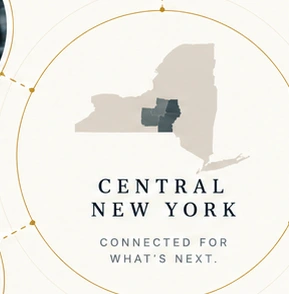
Local knowledge meets regional infrastructure and real industrial demand.
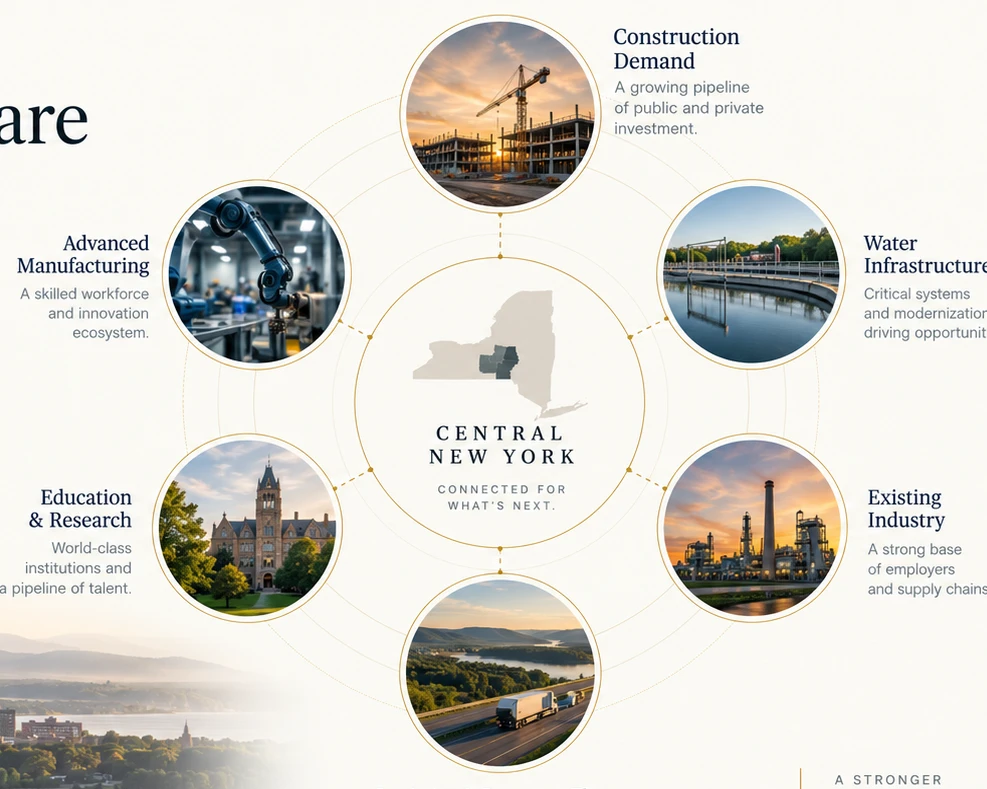
Public and private investment creates potential demand for qualified products and services.

Water treatment and potential industrial reuse may support multiple qualified uses.

Established firms, equipment and supplier relationships can help carry new work.
Movement and handling costs influence which regional partnerships make sense.

Training, testing and technical institutions can assist with qualification and workforce skills.
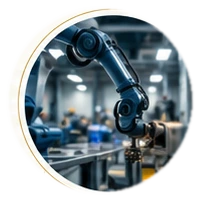
Specialized technical requirements and skilled work create potential supplier relationships.
MANY WAYS TO CONTRIBUTE
A regional opportunity can begin with a business, municipality, producer, researcher or skilled worker identifying a resource, need or capability that has not yet been connected to the right market.
01 / MATERIAL STREAM
Identify what is produced, its quantity and condition, its current destination and any handling restrictions. Compare viable outlets before assuming reuse is best.
FROM LOCAL POSSIBILITY TO REPEAT VALUE
Geographic proximity is an advantage only when the application is safe, the specifications work and each participant has a credible commercial reason to take part.
Record location, volume, composition, variability and current use.
Confirm technical, environmental and regulatory requirements.
Define processing, testing, logistics, buyers and accountability.
Assess delivered costs, viable margins and sustainable demand.
THE SECOND DIVIDEND
A region grows stronger when tested methods, supplier relationships and practical skills can serve the next customer as well as the first.

HELP IDENTIFY WHAT COMES NEXT
Know about a useful resource, a technical capability, a supplier opportunity or an unmet local demand? That is a place to begin the conversation.
These links lead to related opportunity pages. A direct submission channel has not yet been established.Prepare an outline about local materials, skills, demand or practical constraints. Nothing is submitted or stored by the preparation page; a receiving organization and official intake channel have not yet been established.
Prepare a contribution